

Metal Fluid BRONZE. For cold casting without melting.
Metal Fluid BRONZE. For cold casting without melting.
Couldn't load pickup availability
Metal Fluid BRONZE. For cold casting without melting. 1 kg pack.
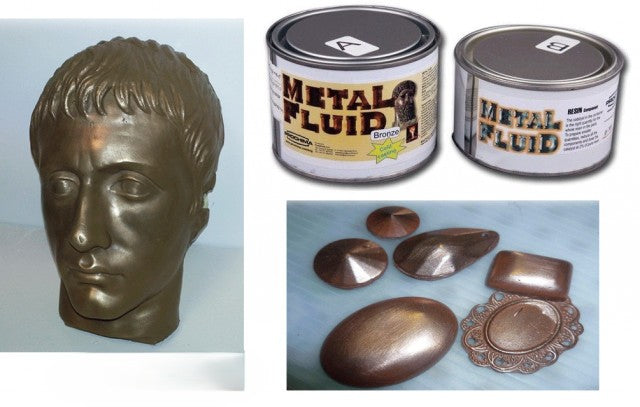
METALFLUID is a conglomerate of metal granules in a resin binder. It is typically used for casting in silicone rubber molds (but also in rigid molds for relatively simple parts, without undercuts) to produce cold metal parts without melting. After polymerization, a sintered product is obtained that is 80-85% pure metal (the excess resin, which acts as a carrier and rises to the surface, is removed after hardening). The resulting piece must then be sanded with high-grit paper and polished with abrasive polishing paste or liquid polishing products to remove the light surface resin patina and reveal the metal's full beauty.
Processing data:
– Processing mix: 700 g powder/300 g resin;
– 1 kg resin/metal mixture = approximately 200 cc;
– Catalyst dose: 2% (with syringe 1 cc = 1 gr; with dropper 20 drops = 1 gr).
Processing tips:
Remove the required amount of resin from the can, based on the size of the piece you want to create. Add 2% catalyst (2 grams per 100 grams of resin) and mix well.
Add the metal powder a little at a time, stirring constantly until the mixture has a creamy but smooth consistency. Pour into the silicone rubber mold, taking care to avoid trapping air bubbles, especially in undercuts. To help release them, tap the mold from the outside. For more complex objects, use a small brush or toothpick, dipping them into the mixture over the details during casting. With proper curing at 20°C, the mixture begins to gel after about 45 minutes and hardens in 120-150 minutes. Before hardening, the metal powder compacts due to its high specific weight, and excess resin rises to the surface; this must be removed by sanding after hardening. For this reason, the mixture must have a high percentage of metal to prevent excessive resin surfacing. It is therefore advisable for the mold to have a higher edge than the piece to collect excess resin. If the resin appears excessive, you can fix this by adding more metal powder, which will compact into the excess resin, increasing the volume of the conglomerate; this could cause the excess resin to overflow from the mold. The piece emerges from the mold covered with a light layer of resin that conceals the metal and must be sanded to remove the patina and expose the metal. Sandpaper, felt, abrasive pads, or steel brushes can be used. Finally, polishing is performed. Bare metal behaves like real metal: it oxidizes upon contact with air. To maintain its shine, it must be protected with a clear finish or frequently polished. The oxidation process can be accelerated by dabbing with a variety of mild acid solutions, creating an antique patina. METAL FLUID is a polyester product, so it emits a styrene odor that lingers for a few days: ventilate the work area, keep out of reach of children, and do not dispose of residues in the sewer.
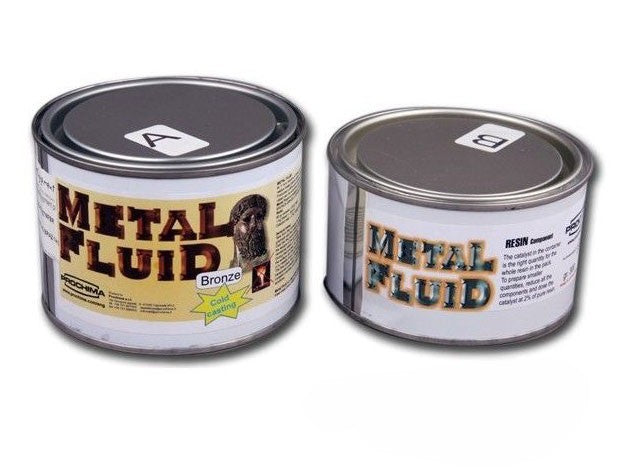
Packaging: Available 1 kg packages include catalyst. The catalyst in the bottle is the dose for the entire resin in the can: if you need to divide the contents of the Metal Fluid to prepare smaller quantities, you must reduce all the components proportionately. The catalyst should be dosed at 2% of the pure resin.
Characteristics of Metal Fluid:
Reproduction fidelity
Good dimensional stability, almost zero shrinkage
Good resistance to impact, water and aging
Excellent paintability.